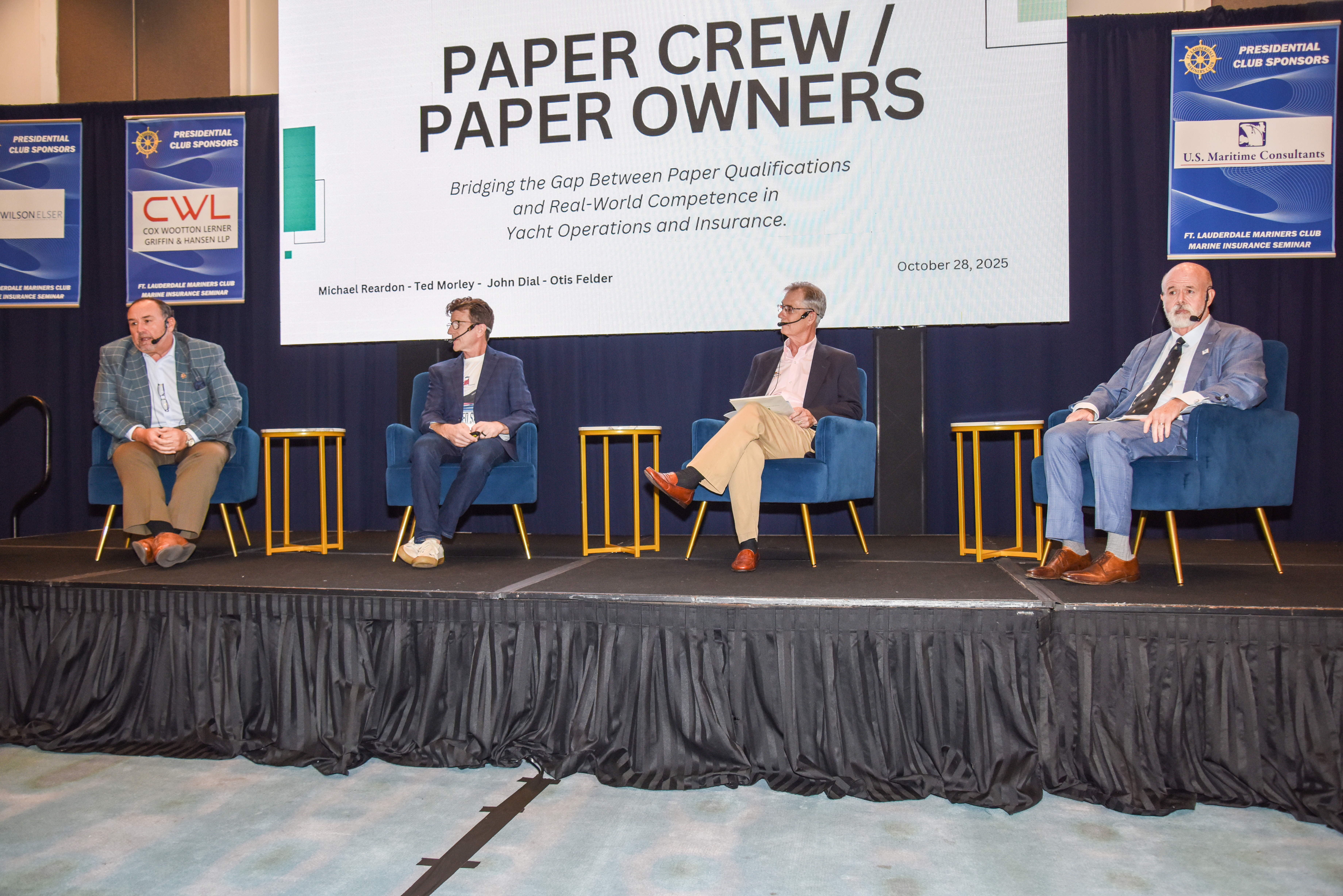
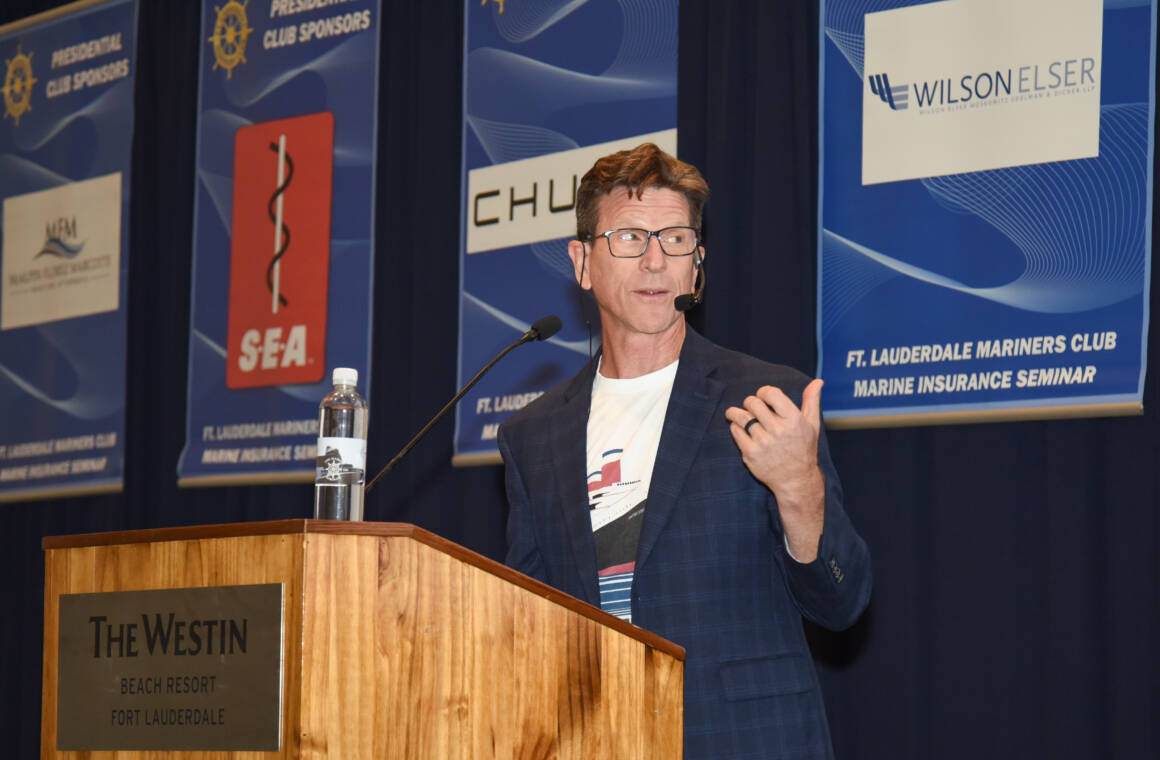
A cornerstone of RYC is dedicating our time, experience, and energy to the industry we are so passionate about. We were thrilled to see Michael Reardon join Ted Morley, John Dial, and Otis Felder on the Paper Crew / Paper Owners panel at the Fort Lauderdale Mariners Club Marine Insurance Seminar. The session addressed a topic everyone in the room recognized instantly: the issues that arise when there is a gap between credentials or compliance records and actual hands-on skills and confidence. The discussion was lively, candid, and full of insights that stayed with us long after the event.
The panel dove straight into the core of the issue: what should you do when every certificate, manual, and audit indicates a vessel is compliant, but real life tells a different story? We studied case studies that showed the problem in action, ranging from captains who were certified on paper but failed virtual simulators, to falsified STCW paperwork, and even the disastrous Titan submersible; but we also discussed the positive side and looked at case studies where disaster was averted, only because an experienced and capable captain was on board.
One thing was clear: although Michael, Ted, John, and Otis bring different viewpoints and experiences in our industry, they all have seen significant safety gaps. We are in an era where digital falsification is increasing, and the number of owner/operator vessels has surged since 2020. Last year, 69% of deaths on the water occurred where no formal safety training was completed.
Paperwork can tell you a lot, but it can’t tell you everything. The gap between certification and capability is where incidents happen, and where insurers, managers, and operators feel the consequences most sharply.
One theme that really resonated with the crowd was the idea that responsibility can easily become scattered when everyone assumes someone else is in charge. The group discussed the limits of training certificates, the challenge of verifying real competence, and the tricky but important question of who, if anyone, qualifies the owner.
The closing thought captured it well. Paperwork demonstrates compliance. People demonstrate capability. Somewhere between the two lies the truth of how a vessel truly operates.
We left feeling grateful for the turnout, the lively engagement, and the chance to be part of a conversation the industry is clearly ready for. A big thank you to the Fort Lauderdale Mariners Club for hosting such a fantastic event and to everyone who stopped us afterwards to share their own stories. It is always a good sign when the panel ends and the conversations continue in the hallway.